

Yuen: The Politics of Tudung Labuhs
The Politics of Tudung Labuhs
by Yuen
I always get the right answers because I always ask the right question. I think that many do not know to seize the opportunity to learn from others when they have the chance. Conversation with strangers in the bus, field trip to old folk‚Äôs home and even that colleagues or classmates that may seem ordinary enough may have a lesson or two that you might benefit from. Those people who dresses up, dressing themselves up in weird ways that are ordinary inside- they need to have effort to make themselves different form others. It is those people who seem ordinary that are different- they don‚Äôt even have to put effort at all, they just are. I mean, just look at Jeff Ooi, he looks like an ordinary uncle residing in USJ area that you see watering plants in the evening that you say hi to whenever you jog around your neighbourhood. That is when you ask your question. My stale overused clich?© of not judging people from their cover.
Anyway, enough of the lengthy introduction, I recently acquainted with a tudung labuh-ed chick in my uni because we happen to be under the same supervisor for our thesis. Honestly speaking I would not be knowing her that well if its wasn’t because of that. For the uninitiated, tudung labuh is those head covers (tudung) that are bigger than the ordinary (the tudung labuh-ed might claim that their’s is the ordinary), that covers half of the wearer’s body when it is put on.
The tudung labuh donners (TLD) have a certain stigma attached to them, that they are pious (which in most cases is true) and with that, they are not approachable by the ordinary opposite sex (unless you are the bilal* or imam* or your local surau* or PMI* leader)- which is NOT TRUE. With this stigma, the Malay guys would not get close, or control their friendliness when confronting these girls, and in most cases, avoid them altogether. For me who knows these stuff prior to this, including yours truly, keep my distance with these TLDs.
Few weeks back, I went out with one of the TLD and another non-TLD Malay companion of mine for satay at Kajang. And to prevent me from elaborating the outing lengthy-ly, I present my conversation with the two girls in the form of dialogue. There is Y, Yuen (me), A (a TLD, that I am very fond of, who is damn cute despite the tudung labuh) and B ( a non-TLD, but used to be one, who also happens to be a qari* during schooldays). The text is not exactly precise, it was stored in my mind and through my elaboration.
Y: So tell me A, when do you start to be a TLD, and what makes to wanting to be a TLD?
A: I do not see it as something phenomenal, or the way society magnified it through their views. It was something that I felt comfortable doing, so I wear it, as practise of mine of being a Muslim. I started wearing tudung labuh after Form 5, because before that everybody was wearing the “ordinary” tudung and I do not want to seem out of place.
Y: What do you think, as the implication of being a TLD, do you notice that people treat you differently just because you are donning a tudung labuh?
A: Absolutely. I notice, for example, that guys do not come close to me, and even to the extend of avoiding me in classes, and tend to be someone different than when they are with non-TLD girls.
Y: Yeah, even me, as a person who knows the story behind the tudung, tend to avoid and control what I say when I am around you TLDs. How about you, B? Do you have any tudung labuh story yourself?
B: Having you bringing up the issue, I am once again reminded of my own story. I was in a pious group once, being a qariah representing my school (and she won) and that naturally bring upon some implication of its own. After my schooling day, when I am back to my family, I do not feel like wearing it anymore, I know that I am not the TLD type, and I do not want to continue being a TLD to conform and end up a hypocrite, so I lose it and opt for the normal tudung instead. Some of my old friends were calling me and questioning me of what I have turned into, or how I’ve changed and wasn’t the same person. I just replied straight to their face that I don’t want to obliged to that anymore and do not wish to be a hypocrite.
Y: (Looking at A) I understand that Muslim has the obligation to menegur those who doesn’t go according to God’s wish, say, those who doesn’t don a tudung at all, and I believe that there is a thin line between advising and pestering (and thus, forcing) a person to take our advice, how do you balance that? And how do you view those who does not wear tudungs?
A: I do not have problem with those who doesn’t, I mean I am friend with them as well. The obligation is to tegur once or twice, but after that, you are off the hook, as you have done your part, so we go according to that.
Y: But there are those who doesn’t stop at once and twice right? Those who go to extreme extend to push people? That when the person, the advisee, refuse, she will be labeled as all sorts of things but when she succumbs, she end up a hypocrite and unhappy of people determining the way of living their life?
A: Yes. I have my own tales as well. Despite me obliging the tudung labuh dress code, sometime when I dress in slightly fancier clothing, with colours and slight figure revealing item of clothing, or not wearing the cuff-linked jubah, I get intruded with questions by my TLD peers. Like they ask what have happened to me, which I have strayed away from the right path and constantly send me quotations from the Koran as a “reminder” to me. I really feel pressure by that, and inevitably, I have lost the friend and even refuse to open my hostel room door whenever they are knocking.
Y: I think that is the danger when you go to the extreme, I always opposed to that, regardless it’s the matter of religion or anything. And I must tell you A, that you should not judge a person badly just because they are not wearing a tudung.
A: Yes, and even Islam teaches us to be moderate (sederhana) in whatever we do. I mean, some of the TLD are worse than the non-TLD as well. Nobody is better than others.
And then I tell the girl how I know about Islam more than my own religion, and awed them with how I know how to mengucap and tell the difference between the subuh azan and other azans. No, I am not horsing with the religion, it is an understanding and enlightment to know. Plus, it makes the girls happy, I mean surely you are happy when people know about your religion or language, like the person pay attention and learn.
And then B say that I haven’t got my hidayah yet. Hmm…
From that conversation above, I learnt my lesson of not once again, to judge people by the surface. Once again I learn. Even people like us have some racism and negative perceptions against others, deep inside us. Like when you are walking in a dark alley and you see a certain (insert race or any other label here) man, big sized in front of you, you will have a certain fear incited by your racism. It might be lesser fear in you if the man is of other race or other characteristic, for example. These subconcious racism that we should try to eradicate.
Annihilating all those small bad values in us, purging all of it once and for all. And stop reassuring yourself that you are not racist by having a collection of friends that includes all the races, are those from other races are even your ‘real’ friends? And be careful with those careless racist remarks that might make when you are in the confinement of your own race, stop others when they are about or shut them up when they have blurt it out.
And A is still cute as ever.
And keep on conversate-ing.
*Glossary;
Bilal Рreferring to person who calls for prayers, who recite azan (or adhan) signifying the time to pray. Name from an Ethopian slave freed by Abu Bakr that later was chosen as Muhammad’s muezzin.
Imam – referring to those who calls for prayers
Azan (Adhan) – the call for prayers. Containing the words, in Arabic;
God is most great! God is most great!
God is most great! God is most great!
I testify that there is no god but God
I testify that there is no god but God
I testify that Muhammad is the Apostle of God
I testify that Muhammad is the Apostle of God
Hasten to prayer! Hasten to prayer!
Hasten to salvation! Hasten to salvation!
God is most great! God is most great!
There is no god but God
Qariah – referring to a female Al-Quran reciter (male: qari). (Compare with Hafiz)
Hidayah – sign of guidance from God (read: Allah). Literally means gift or present.
Mengucap – a term used in Malaysia referring to the recitation of Kalimas (Kalimat Sahadat)
Tudung labuh – a term used in Malaysia to refer to the hijab (tudung) that is bigger than the conventional tudung wore by female Muslims, that usually covers not only their hair, but their whole upper part of the body as well.
PMI – Pertubuhan Mahasiswa Islam. A considerably PAS leaning student association.
END.
ricecooker note: while researching for an image for this story, i stumbled onto this site: an Indonesian site selling Malaysian porn!. Kiddies, don’t dare clicking that link!



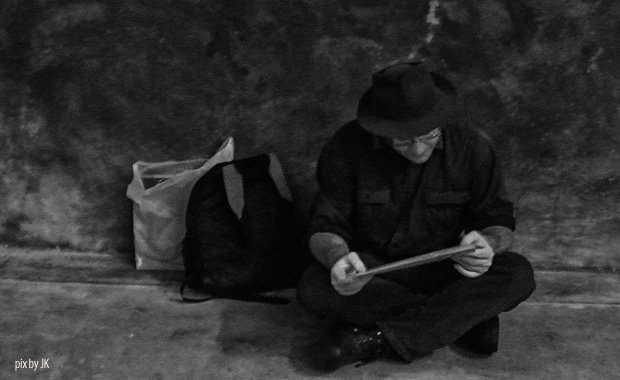




what i’m thinking rite now?? hmm.. i’m thinking of going on stage with carburetor dung drag with a tudung labuh and a mini skirt with make up all over,
ok jugak 2 alak…he
bijak2
> azam 🙂
tak cukup ‘rebel’ lah macam tu alak.
lain orang lain perception
*dan alak sedia untuk dibogel lagi
* :))
Let me tell you one thing. Do not ‘pandang rendah’ those who do not ewar tudung. Tudung is merely influenced by culture. It is not even stated in The Quran! I challenge you to find a paragraph/verse in the Quran (without presence of hadiths) that clarifies a female has to be covered from Top to Bottom.
Read this please: http://www.submission.org/dress.html
“Quran is very clear about the dress code for the believers. Innovations and fabrication intorduced Hijab (veil) to Islam (submission.) Hijab (veil) is a traditional, not religious head cover that dates back to ancient civilizations, and is not supported or advocated by the Quran.”
3 rules for women’s dress code:
1. FIRST RULE : RIGHTEOUSNESS
[7:26] “O children of Adam, we have provided you with garments to cover your bodies, as well as for luxury. But the best garment is the garment of righteousness. These are some of GOD’s signs, that they may take heed.”
2.SECOND RULE : COVER YOUR BOSOMS (Hijab in The Quran does not mean TUDUNG!)
3. THIRD RULE : LENGTHEN YOUR GARMENTS
So, why are we women being pressured in such way?
alamak…
tak reti tulis b. inggeris….
nak comment ida_tasha..
tak baik ar challenge2 nih. takut lain jadik..
saya tak sekolah ugama gak tapi takberani ar nak
challenge2 nih. takut jadi ikan pari haksss..
tapi klu nampak pompuan seksi ras nak eeeeeerrrrreeeeee jer..
tapi klu nampak pompuan pakai tudung labuh tak rasa bende pon.
apa maksudnyer tu ar..huarhuarhuar……kwang23x